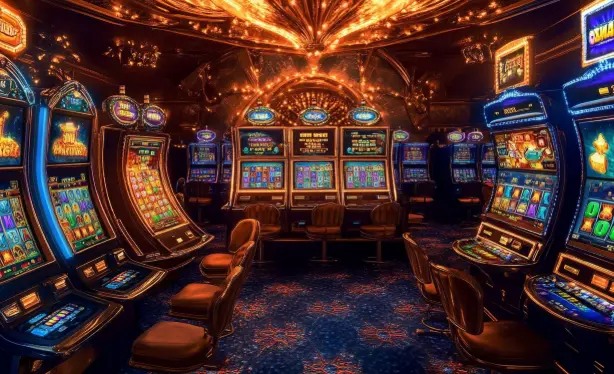
Inside the Evolution of the Live Casino Studio ─ Guide
The digital gambling landscape has undergone a seismic shift, moving far beyond the static, algorithm-driven RNG (Random Number Generator) games of the early 2000s. At the heart of this revolution lies the **Live Casino Studio ─ Guide**, a comprehensive framework for understanding the complex physical and technological infrastructure that powers real-time remote gaming. 🎰 Unlike traditional online slots, a live dealer environment requires a harmonious blend of broadcast engineering, latency-free streaming protocols, and human croupiers operating within a meticulously controlled physical space. This guide delves into the operational mechanics that distinguish a premium live studio from a basic webcam feed, focusing on the critical elements of game integrity, hardware redundancy, and immersive player engagement.
Architectural Foundations and Broadcast Engineering
A top-tier **Live Casino Studio ─ Guide** must begin with the physical architecture, which is far more complex than a standard television set. These studios are built as isolated ecosystems, often spanning thousands of square meters, housing multiple tables for Blackjack, Roulette, Baccarat, and niche regional games like Sic Bo or Dragon Tiger. 📡 The core of this infrastructure relies on SMPTE fiber optic cabling and redundant power generators to ensure 99.99% uptime. The lighting rigs are calibrated to 5600K color temperature to eliminate card reflections and ensure suit symbols are instantly recognizable to the optical character recognition (OCR) software. Furthermore, the "Game Control Unit" (GCU) acts as the brain, synchronizing the physical dealer's actions with the digital user interface in under 200 milliseconds. Any delay beyond this threshold breaks the immersion, making the studio's investment in edge computing and localized CDN nodes absolutely paramount for a seamless user experience.

Dealer Training, Integrity, and Human Element
While technology forms the skeleton, the human dealers are the soul of the operation. A rigorous **Live Casino Studio ─ Guide** cannot ignore the exhaustive training protocols these professionals undergo. 🃏 Dealers are not merely card handlers; they are trained performers who must maintain flawless shuffle mechanics, chip calculations, and conversational engagement while under constant surveillance. The "Eye in the Sky" surveillance system uses AI-driven anomaly detection to monitor for collusion or misdeals, ensuring game fairness. Moreover, the psychological aspect of the "Parasocial Interaction" is crucial here. Players return to specific tables not just for the game rules, but for the dealer's personality. Studios invest heavily in "Dealer Cam" angles and interactive chat features that allow players to tip, greet, and converse, creating a hybrid experience that satisfies the human need for social validation within a digital framework.
Immersive Technology and Multi-Camera Angles
Modern players demand more than a single wide-angle shot. The latest **Live Casino Studio ─ Guide** highlights the integration of multi-camera setups and Augmented Reality (AR) overlays. 🎥 High-definition cameras are positioned to capture the dealer's facial expressions, the card shoe, the wheel spin, and the betting grid simultaneously. The "Immersive Lite" technology allows users to switch between camera angles, creating a directorial experience similar to sports broadcasting. For instance, in Lightning Roulette, the AR engine dynamically multiplies payouts on the screen in real-time, synchronized with the physical wheel. This convergence of physical gambling and video game aesthetics is the primary driver of millennial engagement. The studio's ability to overlay statistics, historical trends, and heat maps onto the live video feed transforms a game of chance into a data-driven strategic session, appealing to the analytically minded bettor.

Regulatory Compliance and Latency Optimization
Operating a live studio requires navigating a labyrinth of international gambling regulations. A credible **Live Casino Studio ─ Guide** must address the jurisdictional licensing (such as Malta Gaming Authority or UK Gambling Commission) that dictates server locations and data retention policies. ⚖️ To comply with strict data sovereignty laws, studios employ geofencing and localized data centers. However, the greatest technical challenge remains latency. The "Glass-to-Glass" delay is the time between the dealer revealing the card and the player seeing it on screen. To mitigate this, studios utilize WebRTC (Web Real-Time Communication) protocols over traditional HLS streams, reducing latency to sub-second levels. This is critical for "Early Payout" features in Baccarat or "Squeeze" features in Dragon Tiger, where the timing of the reveal dictates the betting strategy. Any studio that fails to optimize this latency will inevitably suffer from player churn, as the competitive edge in this vertical is defined by milliseconds.
Future Trajectories: AI Integration and Virtual Hybrids
The trajectory of the live studio is pointing toward a hybrid future where physical and virtual realities merge. The next iteration of the **Live Casino Studio ─ Guide** will likely feature AI-driven virtual dealers coexisting with human ones, offering 24/7 availability without shift changes. 🤖 However, the purist appeal of the human element will never fully vanish. Instead, we will see "Smart Tables" equipped with RFID-enabled chips that automatically calculate bets and detect cheating, allowing the dealer to focus purely on entertainment. The integration of 5G technology will further untether players, allowing for high-fidelity streaming on mobile devices without compression artifacts. Ultimately, the studio of tomorrow will not just be a place to bet; it will be a broadcast network where the player is the director, the dealer is the star, and the algorithm is the silent stagehand ensuring every spin is a spectacle.